Roel Hulsman

Roel Hulsman

PhD Candidate in Causal Machine Learning

AMLab | University of Amsterdam | Adyen

About me

I am a second-year PhD candidate in causal machine learning at the Amsterdam Machine Learning Lab (AMLab), supervised by Sara Magliacane and Herke van Hoof. My PhD is funded by Adyen, a global financial technology company, where I spent a minor portion of my time. My research primarily focuses on causal methods for (nonstationary) time series, although I find myself broadly interested in the intersection of machine learning, statistics and econometrics, with a hint of philosophy.

I graduated with distinction from the University of Oxford with a MSc in Statisticial Science. While at Oxford, I was fortunate to be supervised by Rob Cornish and Arnaud Doucet for my dissertation on the mathematical guarantees of conformal prediction. I also graduated from the University of Groningen with a BSc in Econometrics and Operations Research and a BA in Philosophy of a Specific Discipline (in my case the social sciences), both cum laude.

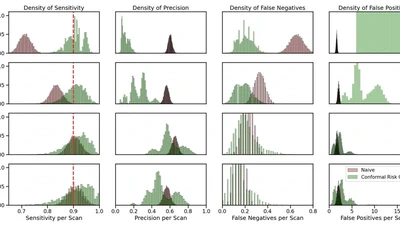
Before starting my PhD, I spent a short period at ASML as a data analyst for business intelligence, where I optimised business processes for the manufacturing of lithography systems. Afterwards, I moved to a role in AI for healthcare at the Joint Research Centre (JRC) in Italy, an independent research institute of the European Commission. There, I mainly worked on conformal risk control for pulmonary nodule detection and knowledge graph construction using Large Language Models (LLMs).

Education

PhD Candidate

Sept 2024
Aug 2028

University of Amsterdam

MSc Statistical Science

Oct 2021
Sept 2022

University of Oxford

BA Philosophy of a Specific Discipline

Sept 2017
Jul 2020

University of Groningen

BSc Econometrics and Operations Research

Sept 2016
Dec 2020

University of Groningen

Propaedeutic Certificate International Economics & Business

Sept 2015
Aug 2016

Radboud University

Interests

Machine Learning Causal Discovery Causal Inference Identifiability Theory Time Series Nonstationarity Regime Switching Multi-Armed Bandits Performative Prediction
📚 My Research

My research primarily focuses on causal methods for (nonstationary) time series. My current interests include causal discovery, causal inference, multi-armed bandits and performative prediction, with an inclination towards theoretical and methodological contributions and time series applications. Fundamentally, I find myself interested in the intersection of machine learning, statistics and econometrics, with a hint of philosophy.

For the upcoming academic year (2026-2027), I will supervise master thesis projects for the master in AI at the University of Amsterdam. Unfortunately I am not able to supervise students in other programs or universities. If you are a master student in AI and you are interested in causality, feel free to reach out!

Selected Publications
Identifiable Markov Switching Models with Instantaneous Effects and Exponential Families featured image

Identifiable Markov Switching Models with Instantaneous Effects and Exponential Families

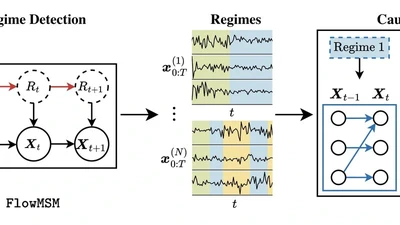
Temporal systems often exhibit non-stationary behaviour, such as seasonal climate variation or glucose fluctuations in patients with type-1 diabetes. One way to model …

avatar
Roel Hulsman
•
Conformal Risk Control for Pulmonary Nodule Detection featured image

Conformal Risk Control for Pulmonary Nodule Detection

Quantitative tools are increasingly appealing for decision support in healthcare, driven by the growing capabilities of advanced AI systems. However, understanding the predictive …

avatar
Roel Hulsman
•
Recent Publications
(2025). Conformal Risk Control for Pulmonary Nodule Detection. In Proceedings of the 14th Symposium on Conformal and Probabilistic Prediction with Applications, volume 266, pp. 445-463. PMLR.
(2024). On Constructing Biomedical Text-to-Graph Systems with Large Language Models. In Joint Proceedings of the 3rd International Workshop on Knowledge Graph Generation from Text (TEXT2KG) and Data Quality meets Machine Learning and Knowledge Graphs (DQMLKG), co-located with the Extended Semantic Web Conference (ESWC), volume 3747.